Overview
Launched in November 2025, Creative Justice marks the next chapter of CURA’s work at the intersection of art, organizing, and research. The program emerges as the Public Policy Design Lab and the Artist Neighborhood Partnership Initiative sunset, carrying forward their strongest elements while creating a more focused and sustainable structure for supporting emerging artists. Creative Justice is rooted in the understanding that communities need creative power, not only technical analysis, to imagine and build different futures. Art makes research accessible, tells stories that shift public will, and mobilizes people in ways other mediums cannot. By embedding artists directly into CURA’s ongoing research and organizing partnerships, the program supports work that uplifts community voices, deepens engagement, and advances movements for equity and justice. Mentorship and co-learning remain central, with long-standing CURA-affiliated artists mentoring the cohort throughout the year.
In its pilot year, the program supports two emerging artists whose practices are grounded in participatory design, visual storytelling, illustration, and creative communication. Over the course of the year, artists participate fully in the community-based research process, contributing to project scoping, community engagement, research methods, and the creation of artistic and narrative deliverables.
Their time is divided across three connected dimensions:
Training and mentorship in community-based research and organizing
Collaboration with CURA staff and student researchers on active organizing and research partnerships
Development of a community-engaged creative project that advances a partner’s goals.
Artists are embedded within the Kris Nelson Community-Based Research cohort, participate in Neighborhoods Now! for organizing training, and conclude the year with a public exhibition that showcases their creative inquiry and partnerships. The program strengthens CURA’s ability to communicate research, supports artists as they grow their practices, and expands community partners’ capacity to use art as a tool for organizing, imagination, and action.
The next cohort will launch in Winter 2027, with the application opening in October 2026
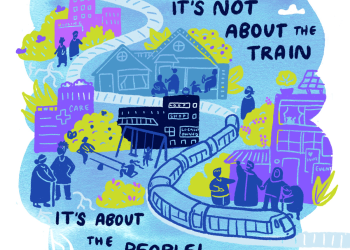
Creative Justice artwork by Onibaba Studio.
Timeline
- July 2025: Applications open
- September 2025 – May 2026: Creative Justice cohort is embedded with CURA’s Community Programs team
- September – December 2026: Artists implement their own community-based creative project with $8,000 grant
- Ongoing: Mentorship, peer learning, and public sharing of work
Fellowship Support
- Hourly Pay: $33/hour for 10-20 hours/week, based on artist preference and schedule
- Grant: $8,000 grant for the last three months of the cohort
- Location: CURA offices and community partner sites across the Twin Cities
- Duration: 9-month team placement + 3-month project implementation
- Additional support: including mentorship, training, and professional development
What Artists Will Do
- Be embedded within CURA’s Kris Nelson Community-Based Research cohort, while also collaborating with other CURA staff across programs
- Contribute creative work to support community-based research and organizing projects
- Collaborate with CURA staff and partners to identify design, storytelling, and communication needs
- Receive mentorship from CURA staff and established Twin Cities artists
- Plan and implement an original, community-engaged art project supported by a grant
- Participate in Neighborhoods Now!, CURA’s training program for community organizing and advocacy
- Share their work publicly through a final exhibition or public presentation
Program Goals
- Support emerging artists in building sustainable, equity-centered careers
- Enhance community organizing efforts with creative strategies and storytelling tools
- Strengthen neighborhood well-being through artist-led, community-informed projects
- Expand CURA’s capacity to engage visually and creatively in community-based research
Eligibility
Who should apply:
- Emerging artists living in the Twin Cities metro area
- Artists whose work is grounded in the lived experiences of their communities
- Individuals interested in the intersections of art, equity, and systems change
Required experience or interest in:
- Participatory design
- Visual storytelling
- Creative communications
- Graphic recording or illustration
Click here to see examples of past work CURA has done in collaboration with local artists.
We especially encourage applications from artists who are Black, Indigenous, People of Color (BIPOC), LGBTQIA+, and those from underrepresented neighborhoods or communities.
How to Apply
Applications open in July 2025 and will be open until August 15
As part of your application to the Creative Justice: Art as Inquiry, Art as Action program, you’ll be asked to submit the following materials:
- Narrative Responses
You’ll respond to a series of questions about your artistic practice, your relationship to community, and how you think about collaboration, storytelling, and change. These responses help us understand your experience, values, and vision for participating in the Creative Justice cohort. - Initial Project Proposal
We ask applicants to submit an early idea for a community-based art project that could be supported by the $8,000 ANPI grant during the final three months of the program. This proposal is not a final commitment. Your ideas may evolve during your time at CURA. This is simply a way for us to understand your planning process and creative approach. - Portfolio
Upload a portfolio that showcases 3 to 5 examples of your past creative work. No written descriptions are required. The portfolio should reflect your artistic style, medium, or community-based practice. - Resume or Artist CV
Include a brief resume or artist CV that highlights your experience with creative work, community engagement, or related efforts. Formal education or institutional experience is not required.
Selection Process
Applications will be reviewed by a selection committee made up of CURA staff and practicing artists based in the Twin Cities. The committee will consider a range of factors, including the strength of the applicant’s artistic practice, their connection to community, alignment with the goals of the Creative Justice program, and their approach to collaboration, storytelling, and social change.
A small group of applicants will be invited to participate in interviews at CURA as part of the final selection process. These interviews are an opportunity to get to know applicants beyond their written materials and to learn more about their interests, values, and potential fit within the Creative Justice cohort.
Final decisions will be based on both the application materials and the interview.
Lee Guekguezian
Lee Guekguezian (she/her) is a community-based researcher committed to decision-making justice and elevating lived experiences through research. As a program director at the Center for Urban and Regional Affairs (CURA), they lead initiatives that connect university resources with community-driven projects across Minnesota. Their work focuses on facilitating trust-based collaborations, translating complex findings into accessible narratives, and using data visualization to explore patterns of displacement, ownership, and investment.
Lee holds a Master’s in Urban and Regional Planning from UCLA and a degree in Geography from Macalester College. Their experience spans affordable housing policy and funding, spatial analysis, and program evaluation, working to democratize research and data to amplify community narratives. Outside of work, Lee enjoys biking around the Twin Cities, making rugs, and being a regular at iPho in St. Paul.
Related programs